
Let’s face it – we all love Christmas time. Here in Australia, we are lucky enough to spend most of this time on holidays, enjoying time with our families in the hot summer and having a bowl down the backyard cricket pitch as we watch the boxing day test. For a professional investor like me, December is often a time where I can make some big gains on my portfolio from the gift known as the Santa Claus rally. This seasonal phenomenon can often occur in the latter parts of December – the challenge is timing your way into this market so that you don’t miss out on the action.
Let’s take a look at what the stock market typically does in December:
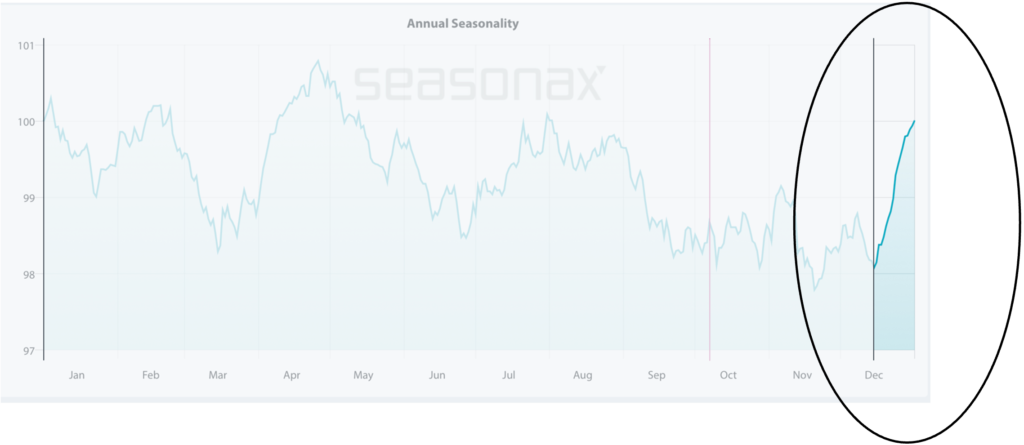
Taking a look at the 15th of December through to the 1st of January, the ASX over the last 30 years or so has seen some exceptional gains more often than not. The stats below, according to our seasonal screener known as ‘Seasonax’, speak for themselves throughout this period:
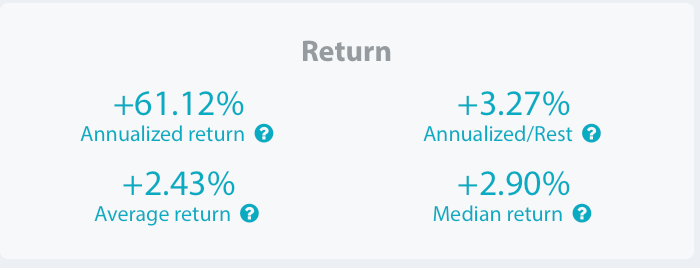
The market trades higher through this period around 86% of the time and averages a gain of 2.43% – they’re some pretty good odds if you ask me!
So, you may be thinking, why does this happen? Why is the market so bullish throughout this period? Well, the answer really boils down to one thing – a lack of change to economic policy. We know that the RBA meets every month on the first Tuesday to discuss economic policy and potentially alter interest rates, except there is no meeting in January. This results in traders having more certainty surrounding the economic landscape as they head into the back end of the year, and with more certainty comes more of a proclivity to buy shares – pushing prices higher. Whilst the RBA takes their holiday break, this is a time where you could be making some serious gains.
Now hold your horses – just because the market typically makes gains through late December does not mean you pile into any old stock on the 15th of December. Firstly – you need to time the market better than this so that you put yourself ahead of the average investor. My advice would be to consider entering the market in September (usually one of the weakest months) or late November, where you may be able to pick up some bargains. Secondly – make sure to buy the right asset. Holding the right kind of shares in your portfolio is critical and can make or break your overall performance. With my team at Australian Investment Education, we teach you to do exactly this through a three-step analysis process using fundamentals, technicals and quants. If this is something that is of interest to you, reach out to one of my team members here: http://bit.ly/aie-mjb
Frequently Asked Questions
1. What is the Santa Claus Rally in the stock market?
The Santa Claus Rally is a seasonal pattern where stock markets, including the ASX and US indices, often experience gains during the final days of December and the first trading days of January.
2. Why does the Santa Claus Rally happen?
The Santa Claus Rally is generally linked to lower trading volumes, holiday optimism, portfolio rebalancing, and reduced uncertainty due to fewer major economic announcements during this period.
3. How strong is the Santa Claus Rally on the ASX?
Historically, the ASX has shown a tendency to rise during the late December to early January period, with gains occurring more frequently than losses over long-term data. However, results can vary depending on market conditions.
4. When does the Santa Claus Rally usually occur?
The Santa Claus Rally typically takes place between around 15 December and the first few trading days of January, although exact timing can vary each year depending on holidays and market conditions.
5. Is the Santa Claus Rally guaranteed every year?
No, the Santa Claus Rally is not guaranteed. While it is a recurring seasonal tendency, market performance is still influenced by global events, economic data, and investor sentiment.
6. Should investors buy stocks before the Santa Claus Rally?
Some investors position ahead of seasonal trends, but timing the market carries risk. A more disciplined approach is focusing on strong fundamentals and overall market conditions rather than relying solely on seasonality.
7. Why do markets often rise in December?
Markets may rise in December due to holiday optimism, lower liquidity, tax-related positioning, and reduced uncertainty from central bank activity during the holiday period.
8. Can learning trading or investing help with seasonal market patterns?
Yes. Understanding seasonal trends like the Santa Claus Rally requires knowledge of market behavior, risk management, and strategy. Structured investing education can help traders make more informed decisions instead of relying purely on seasonal patterns.